
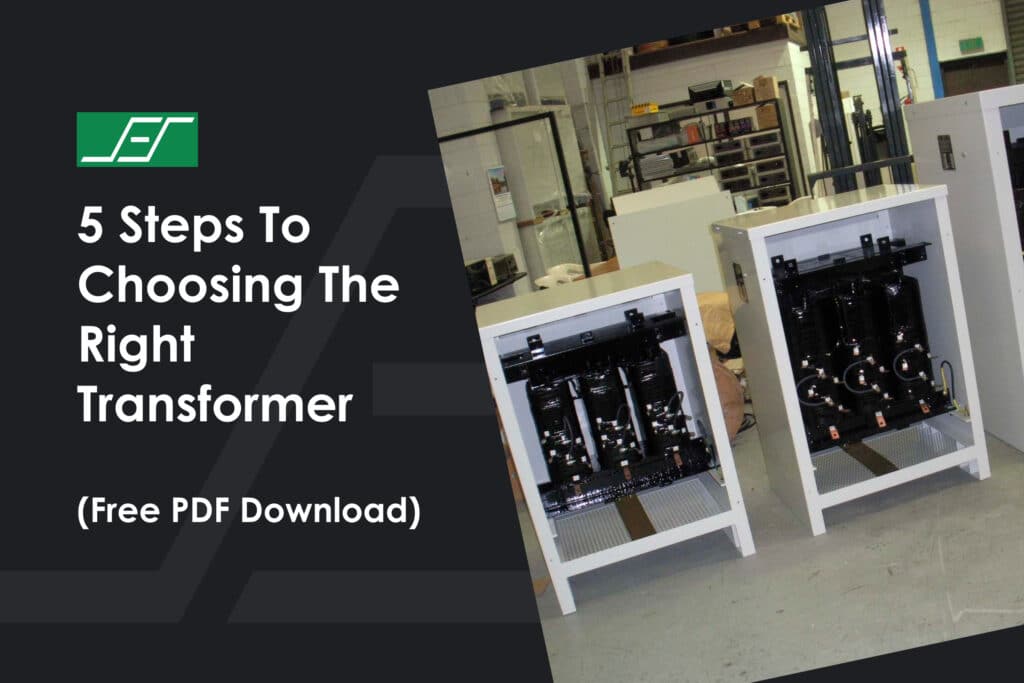
Choosing the right transformer is crucial to ensuring efficiency, reliability, and long-term performance in any electrical system. The right choice will minimise downtime, reduce costs, and ensure compliance with industry standards. Here’s how to make the right decision in five simple steps.
In this handy guide, we run through the 5 steps below:
STEP 1
ELECTRICAL NEEDS
Start by identifying the specific electrical requirements of your project.
STEP 2
SPECIFICATIONS
Understanding transformer specifications is crucial to ensuring optimal performance.
STEP 3
ENVIRONMENTAL
The installation environment is a crucial factor in transformer selection.
STEP 4
EVALUATION
A high-quality transformer ensures long-term reliability and safety.
STEP 5
DECISION MAKING
After gathering all necessary information, compare technical specifications, environmental factors, and supplier reputations against your budget.
Should you need any further assistance with any specifications or help with figuring out what you need, don’t hesitate to reach out.
Cheers,
SES Transformers
Get the Latest in Power Transformer Solutions
Get industry insights, product updates, and exclusive offers
Any More Questions?
To help us provide you with the best solution to your needs please contact us
Next Post
Isolation or auto transformer, Which is right for you?
March 24, 2025Other News

Understanding Electrical Protection and 3-Phase Isolation Transformers: What, When and why
In complex industrial environments, effective electrical protection isn’t about using a single device. It’s about applying the right combination of technologies to reduce downtime, maintain compliance, and protect people and equipment. Whether you’re integrating imported machinery or building new infrastructure, knowing what protection is needed, when, and why is essential. This guide explains the key…

Understanding 3-Phase Isolation Transformer Configurations: What, When, and why
At Southern Electronic Services, we help customers navigate transformer selection with confidence. Whether it’s for power conversion, electrical isolation, or system integration, our team helps you find the solution. When it comes to 3-phase isolation transformers, understanding winding configurations is essential. It’s not just for function, but for safety, compliance, and long-term reliability. One of…